What You Were Hired For
Keep the infrastructure running
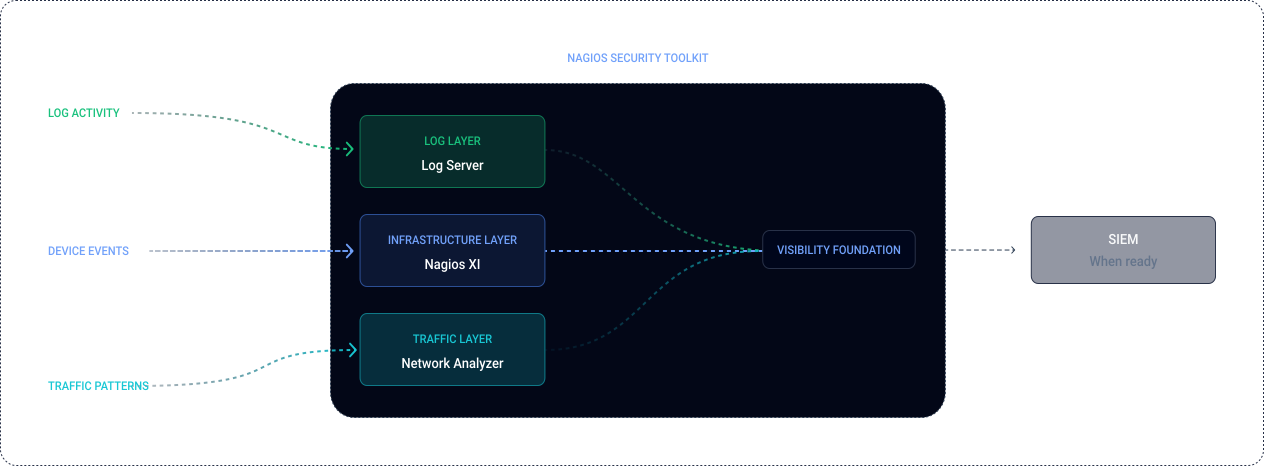
SIEMs analyze security data. The Nagios Security Toolkit delivers the visibility foundation that makes it possible.
of SMBs have no in-house security professional. Responsibility lands on existing IT staff.
Untangle SMB IT Security Report
cite lack of time as their top security challenge, ahead of budget or expertise.
DigitalOcean SMB Cybersecurity Report
SMBs are targeted nearly four times more than large organizations.
Verizon DBIR 2025
In many organizations, security did not come with new personnel or tools. It arrived as a result of mandatory audits, cyber insurance obligations, and incident response standards following a failure or near-miss.
IT teams now face more questions without extra time or resources:
Keep the infrastructure running
Auditors require evidence. Logs must be centralized, retained, and searchable when needed.
Insurers require proof of controls like monitoring, logging, and incident response capabilities to assess eligibility and coverage.
Something failed. Now you need to determine what changed, when it happened, and what signals were missed.
Still one person. Same budget. Same expectations.
The Nagios Security Toolkit includes the necessary components needed: Nagios XI for infrastructure monitoring, Network Analyzer for network traffic visibility, and Log Server for centralized log collection. Each tool is deployed independently on your own infrastructure.
Infrastructure Layer
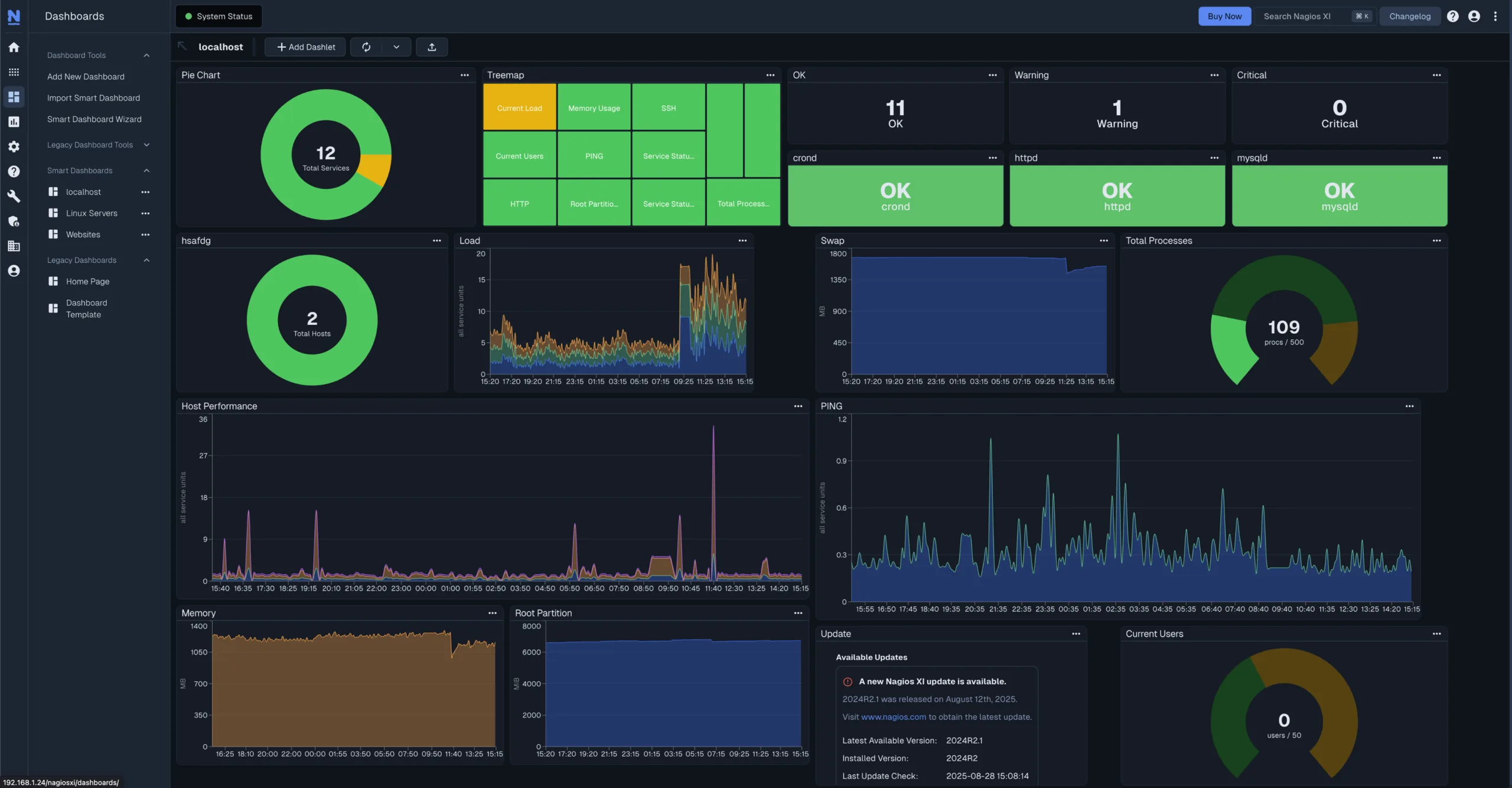
Continuously monitors apps, devices, services, operating systems, network protocols, and key system metrics such as CPU, memory, and disk I/O. Unauthorized devices are revealed as they emerge through Nmap/SNMP-based discovery.
Network Traffic Layer
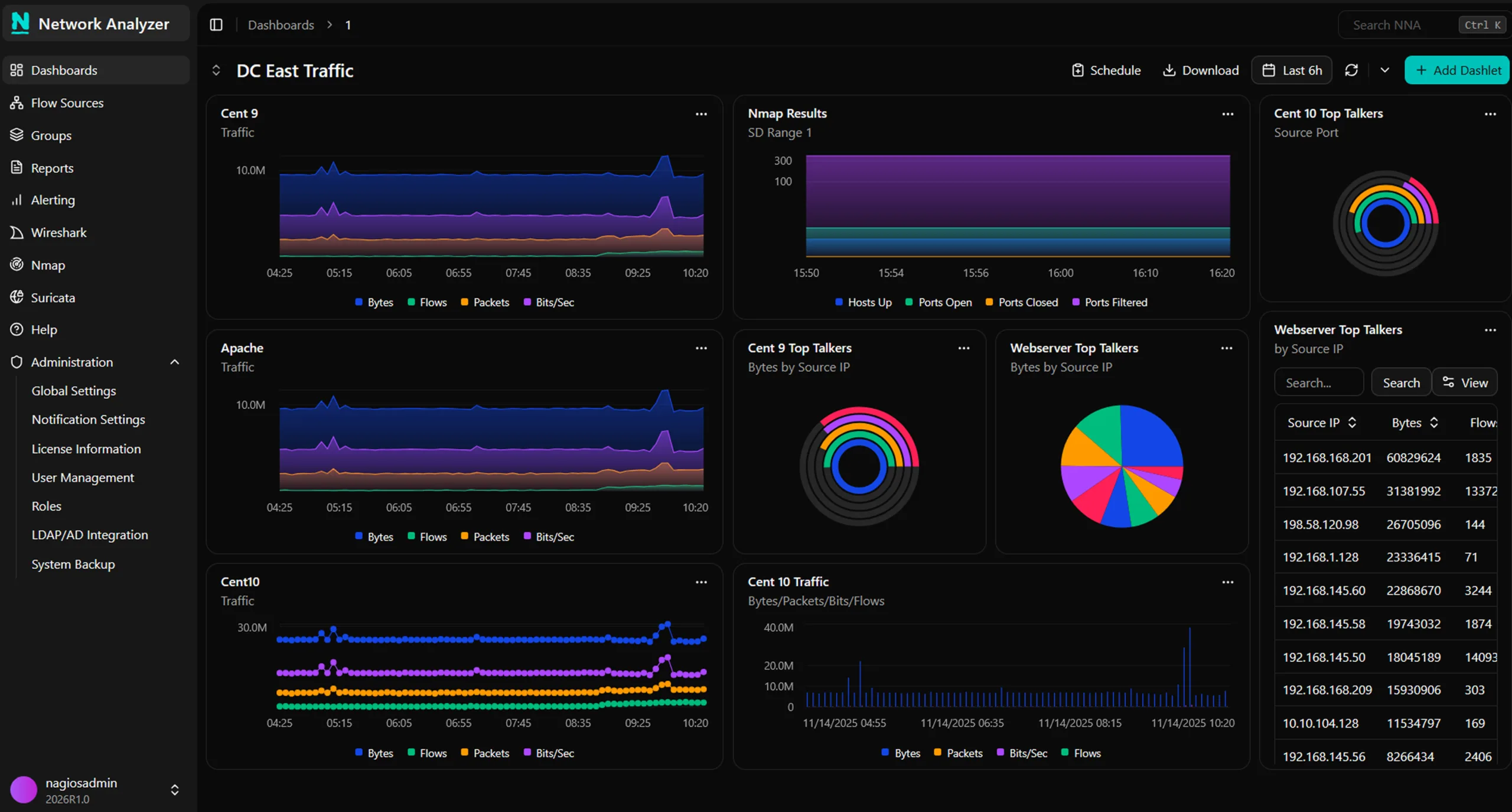
Collects NetFlow, sFlow, J-Flow, and IPFIX data to visualize bandwidth utilization, traffic patterns, and top talkers. Supports custom reporting and threshold-based alerts using a variety of built-in notification methods. Integrates with Nagios XI.
Log Collection Layer
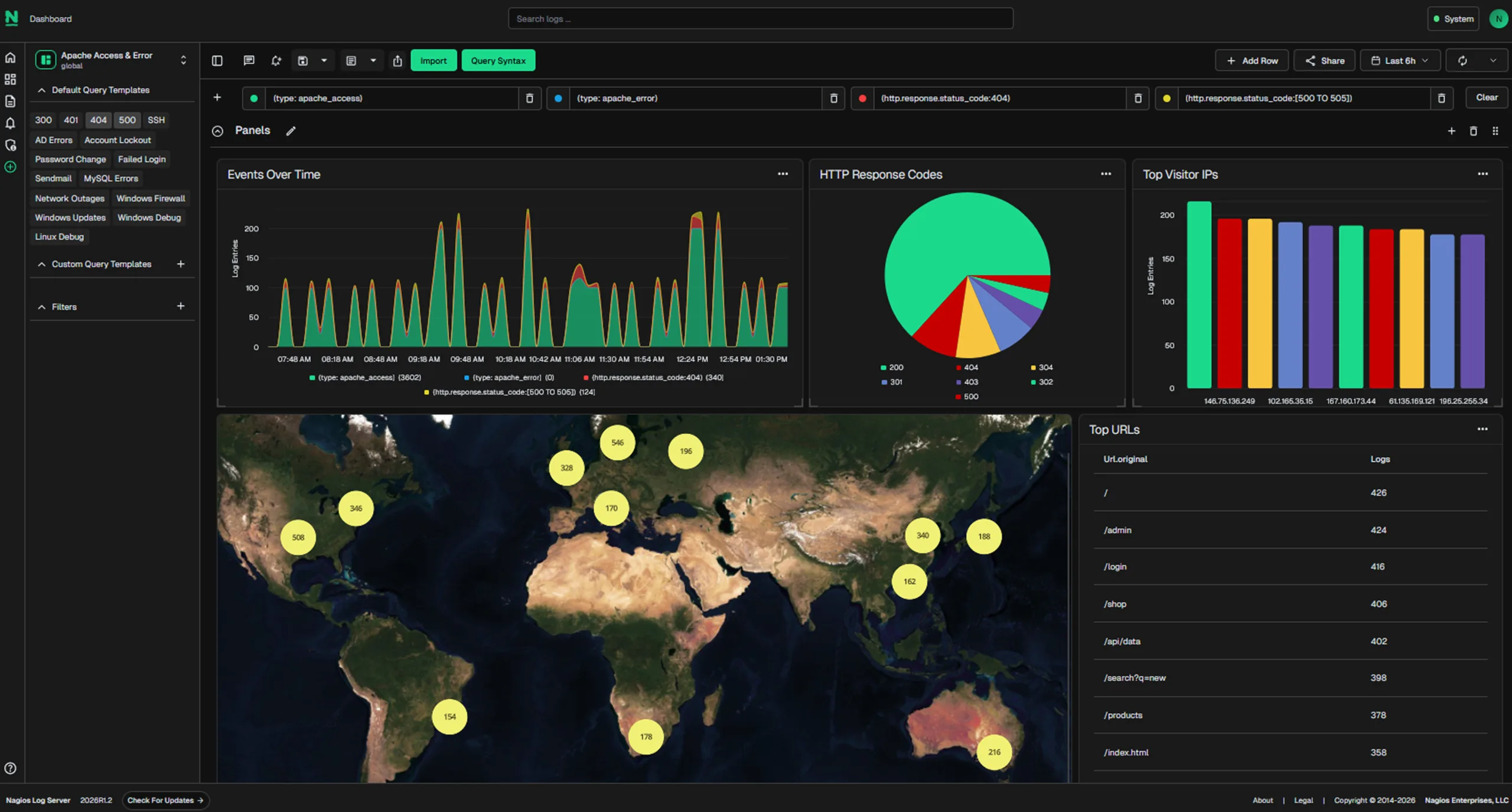
Consolidates Syslog data from servers, firewalls, and network devices into a centralized, searchable repository. Built-in default query for failed login detection. Customizable alert rules on privilege changes and service events.
Infrastructure Layer
Continuously monitors apps, devices, services, operating systems, network protocols, and key system metrics such as CPU, memory, and disk I/O. Unauthorized devices are revealed as they emerge through Nmap/SNMP-based discovery.